Supplements
How to answer Columbia's reading list question
How to choose titles for Columbia's list of books, articles and podcasts so the list shows your real interests, range and independent exploration to readers.
SourceBased on what we at the Bureau learned from Columbia's admissions office.
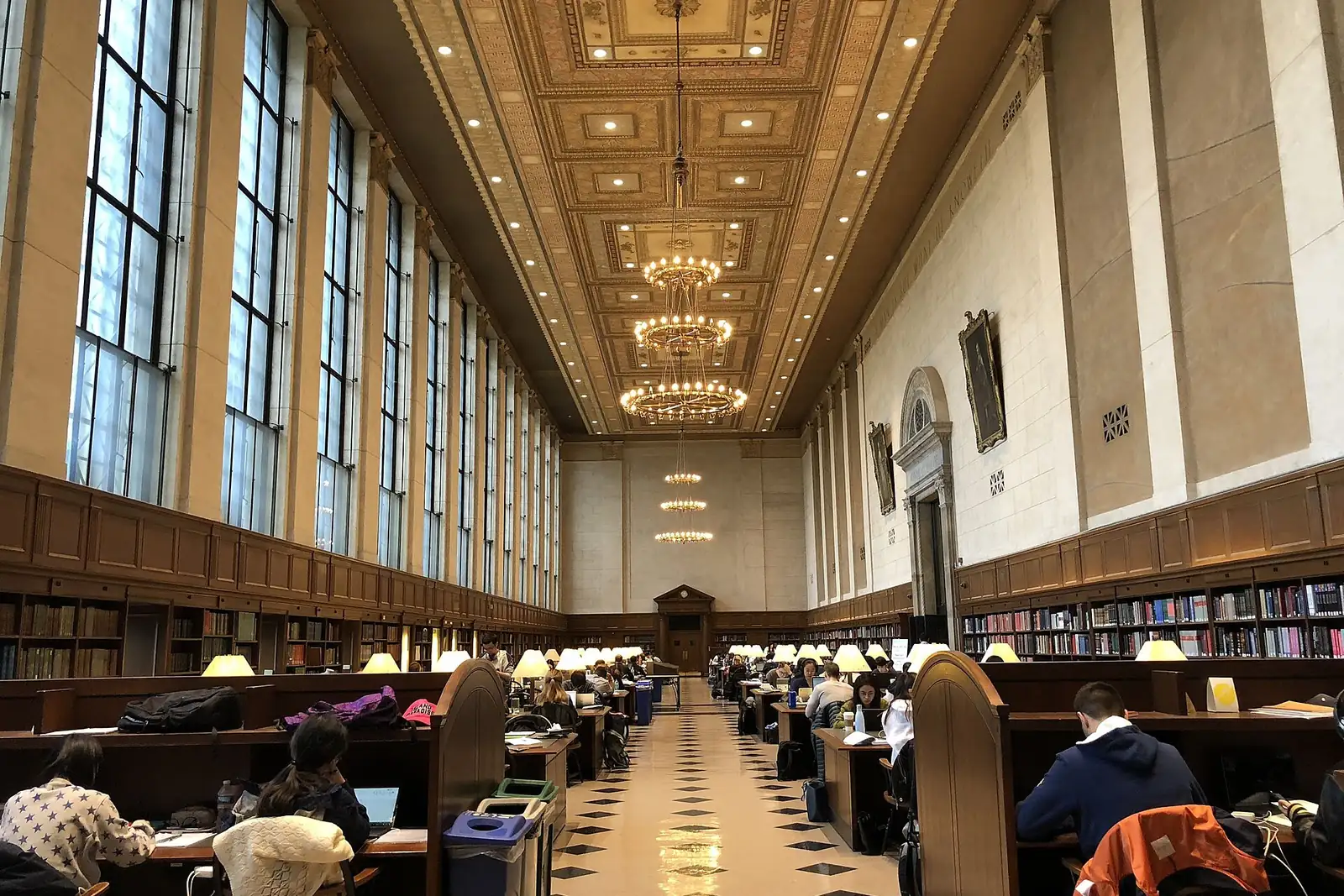

Columbia's admissions office asks applicants for a bare list of the texts, resources and outlets that have contributed to their intellectual development outside their academic courses, and it allows no commentary at all. In 100 words or fewer, the list can hold books, journals, websites, podcasts, essays, plays, videos and museums, set down separated by commas or semicolons, with no numbering, no italics, no author names, no subtitles and no explanatory remarks.
Many students treat the question as paperwork and fill it with whatever they read last, or with the titles they imagine a selective college expects. Stripped of every usual tool for making an impression, the list still says a great deal, which is exactly why Columbia asks for it.
What Columbia's reading and media list can show
Columbia says these questions exist to give insight into your intellectual curiosity, habits of mind and love of learning, and that they are an essential part of a holistic and contextual review. Its own description of a Columbia student puts curiosity near the top: a desire to investigate big ideas, openness to cross-disciplinary scholarship and new ideas, and a willingness to question your own beliefs. A list is an honest instrument for measuring that. You cannot explain an item, so each one has to carry itself.
Picture two lists from future biology majors. One holds two textbooks and a test-prep guide. The other holds a history of the smallpox vaccine, a long-form science podcast, a novel about a doctor in wartime and the natural history museum the student visits on free weekends. Both students like biology. Only the second shows a reader a mind that roams.
You cannot explain an item, so each one has to carry itself.
How to build yours
Start by writing down everything you have read, watched or visited in the past two years because you wanted to. Then cut anything assigned in class, since the prompt asks for development outside your courses. What remains is the raw material. Keep a spine of items close to your intended field, then let the rest show range: a magazine you read cover to cover, a podcast you binge, a play, a place.
Choose items you could discuss for ten minutes. Columbia says its students flourish with an appetite for communal learning and deliberate critical discourse, and it names knowledge of the Core Curriculum, its shared program of seminars on common texts, among the things it looks for. A reader will picture you in that seminar. A famous title you skimmed adds little there, and a less famous one you love gives the reader a reason to remember you.
Read it as a stranger would
A list of four items leaves the reader little to go on, so use most of the space, and resist padding it with the same author five times. Then hand the finished list to someone who barely knows you and ask what kind of person it describes. When their answer matches the rest of your application, the list is ready.
Columbia's list question allows no commentary, so choose self-directed reading, listening and visits with range beyond your field, each one you could discuss at length.
Tactic #93
How does this apply to your child’s application?
Book a free call to discuss your child’s application with a Specialist and ask which tactics are relevant to their plans.