Writing
Using podcasts to find college essay ideas
How idea-driven podcasts can suggest college essay topics and show how to connect different subjects, while you develop your own argument and writing voice.
SourceBased on what we at the Bureau learned from the Stanford admissions office.
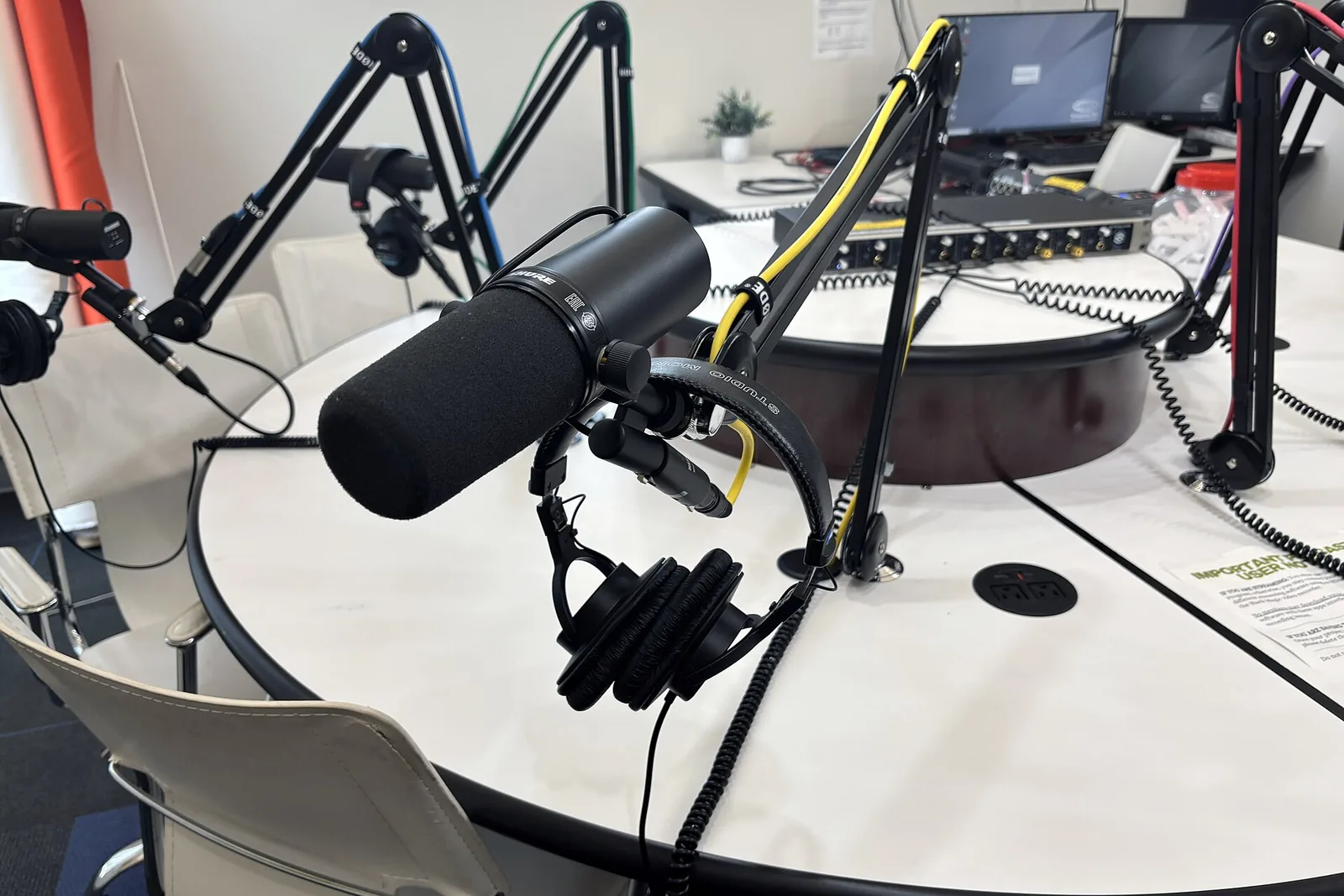

The idea-driven podcast may be the closest modern equivalent to the Enlightenment salon, the drawing room where people gathered to argue about big ideas, and it is a surprisingly good teacher for a student about to write college admissions essays. Students who listen tend to treat an episode as a source of interesting facts and nothing more.
A good episode does offer topics. It can also teach something much harder to learn from a textbook, if the student knows what to listen for, and the clearest example comes from one of the best-known shows in the genre.
Learning essay structure from an idea-driven podcast
Malcolm Gladwell's Revisionist History is the clearest case. In one episode he uses an old Jesuit method of moral reasoning to reconsider a star pitcher's doping scandal. In another he connects a Robert Frost poem to patterns of migration. The pleasure is the joining: two subjects that seem to have nothing in common turn out to explain each other. That is exactly the move that lifts a college essay from competent to memorable, the moment where your personal story and an academic idea, or two academic interests, click together.
So listen the way a writer reads. Notice where the host introduces the first strand and how long he stays with it before the second arrives. Notice the sentence where the two meet. Notice how much the ending explains and how much it leaves to you. Then sketch your own essay on the same frame. Many students find structure easier to learn by ear than from a page of advice.
The pleasure is the joining: two subjects that seem to have nothing in common turn out to explain each other.
Where to find material
Other shows supply the raw ideas. Freakonomics Radio turns economics into puzzles about everyday life. Dan Carlin's Hardcore History goes so deep into a war or an empire that you come out knowing names your history teacher skipped. The archived episodes of The Writer's Almanac offer a few minutes each on something that happened on a given day in literary or scientific history, which is an easy daily supply of small, specific facts. Choose shows in or near your field, and keep a note on your phone for anything that makes you want to know more.
Treat what you hear as a starting point. A podcast is a secondary source, so once an idea grabs you, follow it to the book, paper or archive behind it. The essay needs your own reading and your own angle on top of what the host said.
Use idea-driven podcasts for topics and, above all, as models for joining two unlike things into one essay.
Tactic #114
How does this apply to your child’s application?
Book a free call to discuss your child’s application with a Specialist and ask which tactics are relevant to their plans.