Why Us
How to write the Why Penn essay
How Penn's former dean used culture, curriculum, community and conclusions as lenses for Why Penn essays, and how to connect specific details to your interests.
SourceBased on what we at the Bureau learned from UPenn's former dean of admissions, Eric Furda, and Penn's admissions office.
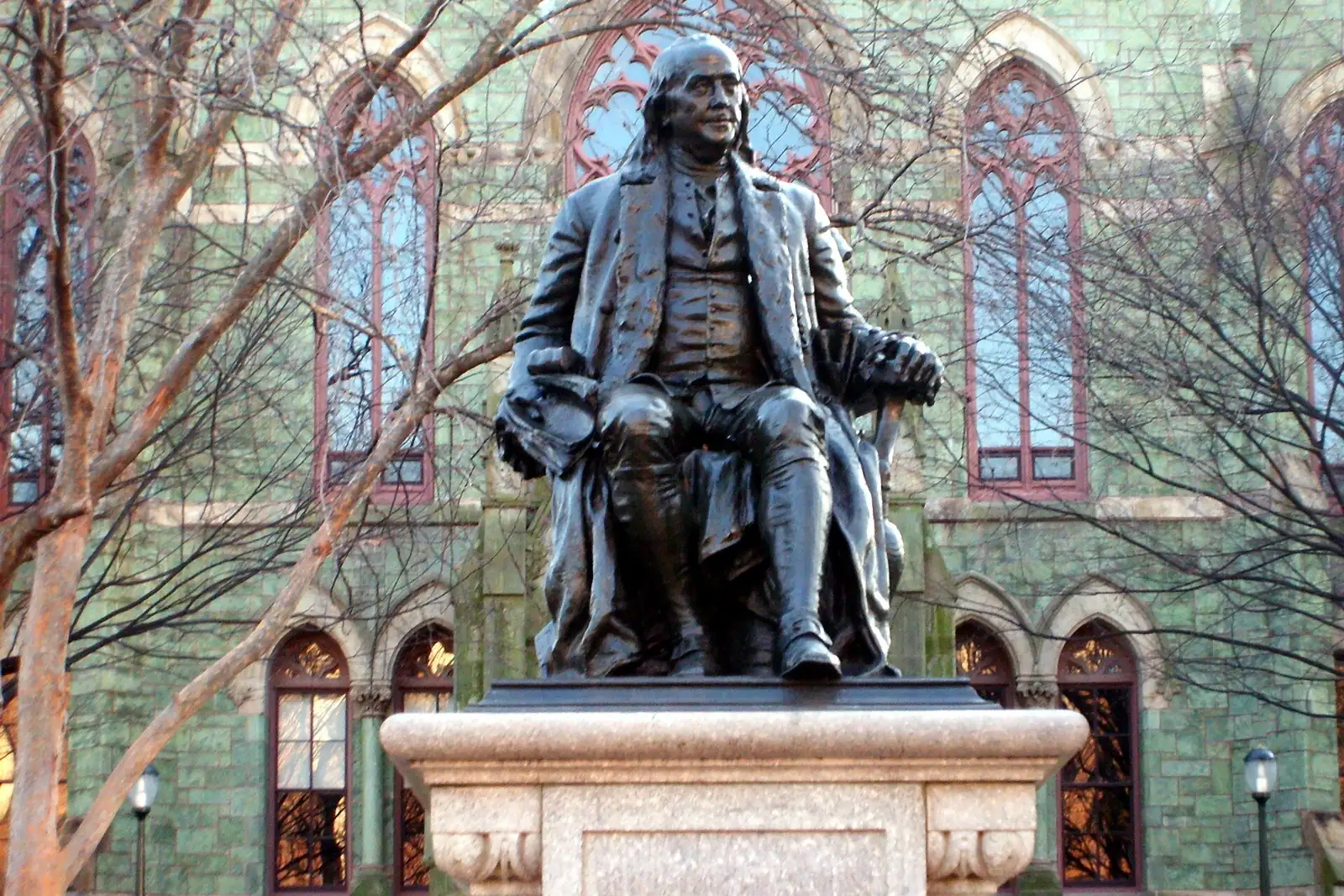

Eric Furda, Penn's dean of admissions from 2007 to 2021, did not count campus visits or email opens as evidence that a student cared, a line he took in a 2017 conversation later published by Penn's Wharton School. Penn, he said, required no set number of interactions; if a student applied, the student was interested.
Many families still spend the year before applications collecting exactly those interactions, on the theory that every college keeps score. At Penn the answer to why this school, in particular, had a different job to do, and Furda had a clear idea of what that job was.
Using Penn's four C's to research your college essay
What Furda wanted to see in place of those interactions was demonstrated knowledge: a student who could explain why this school, in particular.
He offered a framework for judging fit with four parts: culture, curriculum, community and conclusions. Culture is how the place feels and what it values. Curriculum is what you would actually study, and how. Community is who you would live and work beside. Conclusions is what you expect to have gained by the end. Most drafts we see cover curriculum and stop. The fourth C is the one students forget, and it is the one that tells a reader you have imagined yourself graduating from this place.
The fourth C is the one students forget, and it is the one that tells a reader you have imagined yourself graduating from this place.
Where Penn asks for it
The questions change, so check the current wording. In the 2026 cycle Penn asks every applicant two short answers of 50 to 200 words, one of them on how you will explore community at Penn and how your experiences will shape it, and then an essay for your undergraduate school. Penn's own advice is direct: be specific about why Penn, and mention the classes, research, groups or clubs that interest you and how you would spend your time.
Run each draft past the four C's. A sentence about Penn's interdisciplinary reputation covers none of them. A sentence naming a seminar you want to take, the student group where you would actually turn up every week, and the question you expect to be able to answer by senior spring covers three.
Specific without a brochure
Knowledge can tip into a list of names pasted from the website. Penn's writing page offers a test that guards against it: if someone who knows you came across your answer with your name removed, they should recognize it as yours. A course title earns its place only when it is attached to something you already think about. Start from yourself, from the question you keep returning to, and then show where at Penn you would take it.
Furda had one more piece of advice for families touring colleges: notice whether the signals a school sends are authentic. Your Why Penn answer is read for the same quality.
Penn's former dean wanted demonstrated knowledge over demonstrated interest; cover culture, curriculum, community and conclusions with specifics tied to your own questions.
Tactic #91
How does this apply to your child’s application?
Book a free call to discuss your child’s application with a Specialist and ask which tactics are relevant to their plans.